Journal
Urban Living
A Tbilisi Thermal Bath Ritual Carried Into Kostava 49
Urban Living
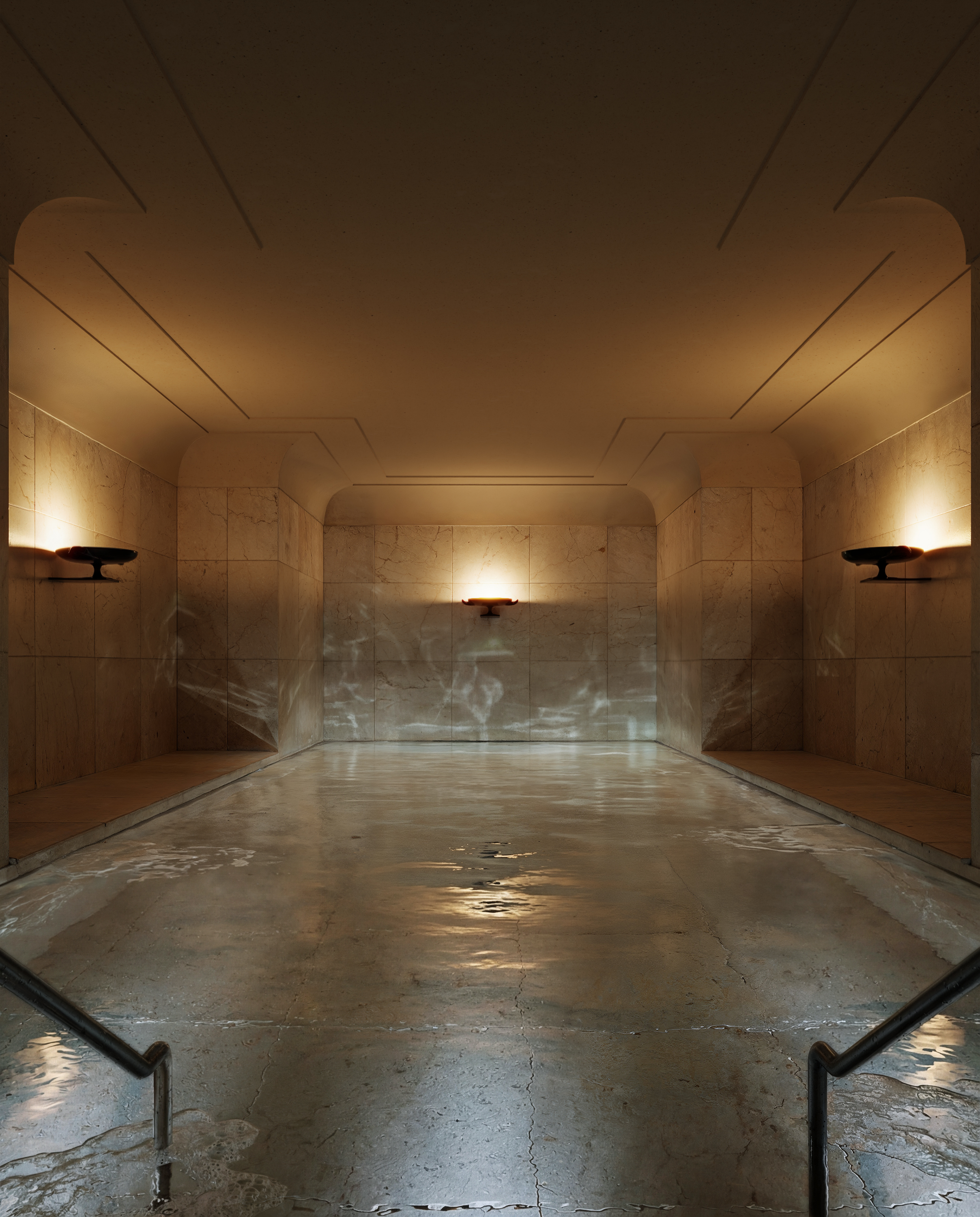
In the fifth century, King Vakhtang Gorgasali was tracking game in the wooded valley below the slopes of Mtatsminda. In the version of the legend that has survived, his falcon struck a pheasant during the hunt, and both birds fell into a hot spring. When the king's party went to retrieve them, they found both the falcon and the pheasant in the water, already cooked by the water's temperature. Impressed by the healing properties of these waters, the king decided to found a city on this site so that people could benefit from their therapeutic powers.
The settlement that followed took its name from the discovery itself. Tbili, in Georgian, means warm. Fifteen centuries later, the springs are still active, and the rituals built around them have remained continuous.
The Composition of a Sulphur Bath
The water that supplies Tbilisi's historic bathhouses rises from beneath the Abanotubani district at a temperature that needs no mechanical heating. Its mineral content is unusual - sulphur as the dominant element, with calcium, sodium, and a range of trace minerals dissolved in solution. The characteristic scent is a function of that composition. It signals the presence of the minerals that give the water its therapeutic profile.
The traditional sequence inside a sulphur bath has changed very little. A heated stone surface, a period in steam, a scrub with a coarse mitt known as a kisa, and an extended soak in the mineral water itself. The cycle is structured around the body's response to temperature. The associated effects are well documented and unremarkable - improvements in skin condition, relief in joints and muscle tissue, support for circulation, and a measurable change in sleep quality afterwards.
A Thermal Ritual Carried Into Kostava 49
Inside Kostava 49, a version of this practice has been developed for residents of the building. The work was led by Resense, a Swiss wellness brand whose body of work spans the design of spa and wellness spaces in hospitality projects across multiple regions.
The reference point for the concept is Tbilisi's own bath heritage. The geometry of the spaces follows the logic of Abanotubani, with arched rooms whose proportions and surfaces are in direct conversation with the city's historic bathhouses.
The experience starts with cold treatments. The body's first response is sharp and physical, a contraction that wakes the nervous system before the next stage softens it. Warm mineral pools sit at the centre of the sequence. This is the longest phase and the one most directly drawn from the traditional model. A purpose-designed relaxation space closes the cycle. The space is configured for the body's transition back, with lighting, acoustic conditions, and atmosphere to support a measured return. The documented effects of this kind of cycle align with what the traditional bath has long offered: regulation of the nervous system, improved sleep quality, release of accumulated muscular tension, and a general restoration of vitality.
The wellness experience here carries a social function as well as a relaxing one. Partners or close friends move through the cycle together. The space is configured for shared time as deliberately as it is for individual recovery.
The Ritual in Daily Life
Bath culture in Tbilisi is part of the city's foundation. Kostava 49 brings this ritual closer to its residents, into the rhythm of daily life. The cycle becomes part of an ordinary routine, a way to rest, recover strength, and maintain physical and mental balance.
Bofill film title
Located outside Barcelona, an abandoned cement factory was transformed by preserving its industrial past. Original silos and concrete shells were repurposed into studios and offices, layered with lush gardens that soften the raw structure. This ongoing project treats architecture as a continuous evolution, where the factory’s past and modern life coexist in a living, breathing environment.