Journal
Architecture & Design
How Architecture Shapes Daily Life
Architecture & Design
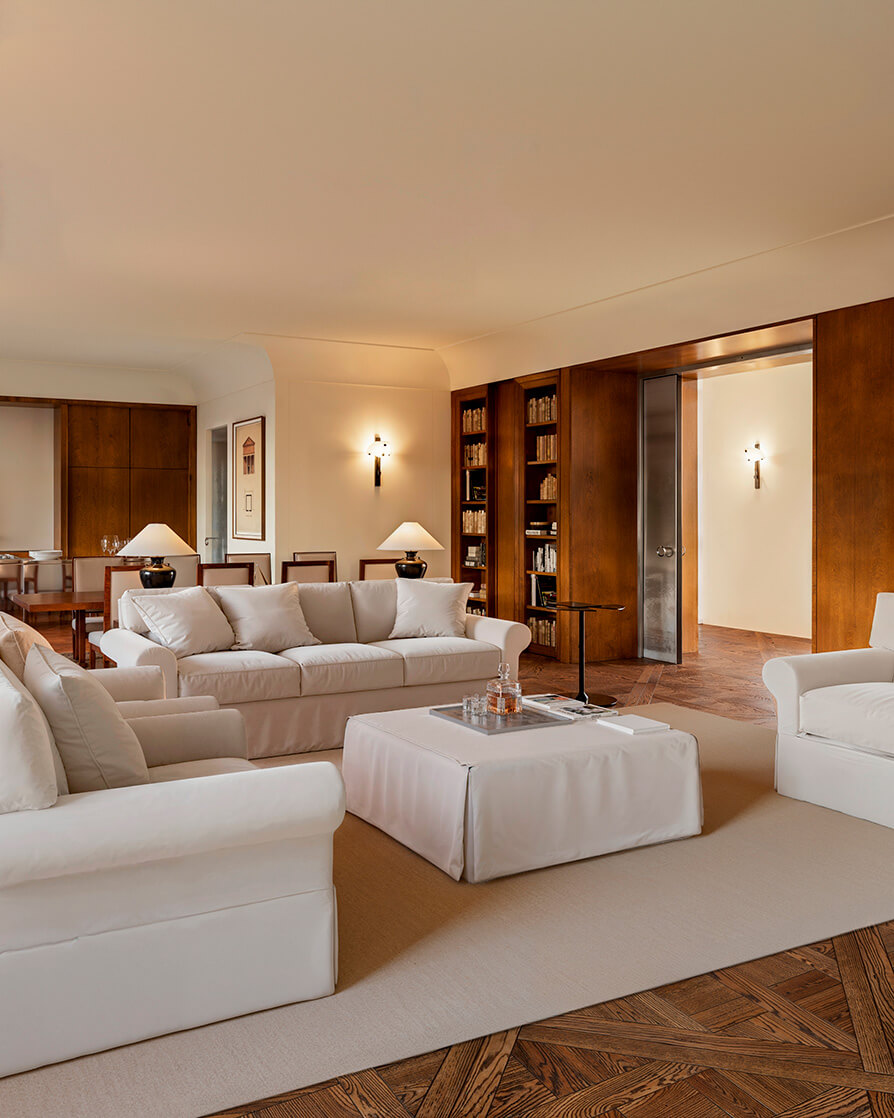
Architecture is temporal. It evolves with use, context, and time. This is the methodology of Bofill Taller de Arquitectura, and La Fábrica stands as its working manifesto. For Ricardo Bofill, this project was proof that buildings are shaped by prior decisions but never fixed by them. A cement factory could become an unconventional studio. A structure can carry its history forward without being bound to a single purpose.
The spaces we inhabit shape how we live, and their origins remain present. The scale of an industrial hall designed for machinery now frames domestic life. A window placed to light a factory floor determines where someone chooses to read. These traces of former use accumulate into the character of a place. The built environment does not merely surround people. It becomes part of their reality.
Rooms Have Rules
Built environments do more than provide shelter. They establish boundaries, hierarchies, and sequences of movement. A grand entrance signals importance. A low ceiling creates intimacy. An open floor plan encourages interaction while partitioned rooms offer solitude.
When we inhabit a space, we absorb its logic. Over time, the structure becomes part of how we move, think, and interact with others. This relationship between spatial configuration and human behaviour is something architects have long understood.
Buildings Never Forget
Most structures outlive their original function. Factories become studios, as with La Fábrica, or nightclubs, or galleries. Administrative headquarters turn into residences. Warehouses become schools.
The question is what happens next. Demolition erases the past and starts fresh. Adaptation preserves the material fabric while introducing a new purpose. Neither approach is inherently correct, but they produce different outcomes for the city and its residents.
A building that adapts carries its history into the present. The original proportions, materials, and spatial relationships remain legible even as the function shifts. New inhabitants occupy rooms shaped by previous generations. The structure remembers what it was while becoming something else.
What Becomes of a Tbilisi Landmark
Kostava 49 in Tbilisi demonstrates this principle of adaptation. Designed by architect Mikheil Neprintsev, the structure was completed in 1936 as the Tea Administrative Building. It served as headquarters for 97 tea factories and thousands of hectares of Georgian plantations.
Five years later, the building's function shifted. It became the Ministry of Food and Agriculture, a role it would hold for over six decades. By 1987, it had earned recognition as a Monument of Cultural Heritage. When the ministry relocated in 2007, the building faced an uncertain future. Its current transformation into a residence represents another chapter.
Written in Stone
The structure speaks through its elements. Large Stalinist-era columns with solid proportions were designed to convey authority and permanence. Corinthian capitals atop these columns introduce classical ornamentation, bridging Soviet ambition with ancient forms.
Traditional Georgian arched windows ground the building in the local context. These motifs connect an institutional structure to the regional architectural language of early twentieth-century Tbilisi.
The current renovation introduces elements inspired by Ricardo Bofill, particularly in the treatment of arches. These additions create dialogue between industrial character and classical geometry, acknowledging both the building's past and its present function.
Still Standing
Preservation does not require freezing a structure in time. Buildings that remain useful tend to survive. Those that cannot adapt often face demolition regardless of their historical significance.
The building on Kostava Street, like La Fábrica, demonstrates that a structure can hold its history while serving contemporary needs. The residents who will occupy these rooms inherit a spatial logic developed decades before they arrived. The original texture remains. What changes is the daily life that unfolds within.
Bofill film title
Located outside Barcelona, an abandoned cement factory was transformed by preserving its industrial past. Original silos and concrete shells were repurposed into studios and offices, layered with lush gardens that soften the raw structure. This ongoing project treats architecture as a continuous evolution, where the factory’s past and modern life coexist in a living, breathing environment.